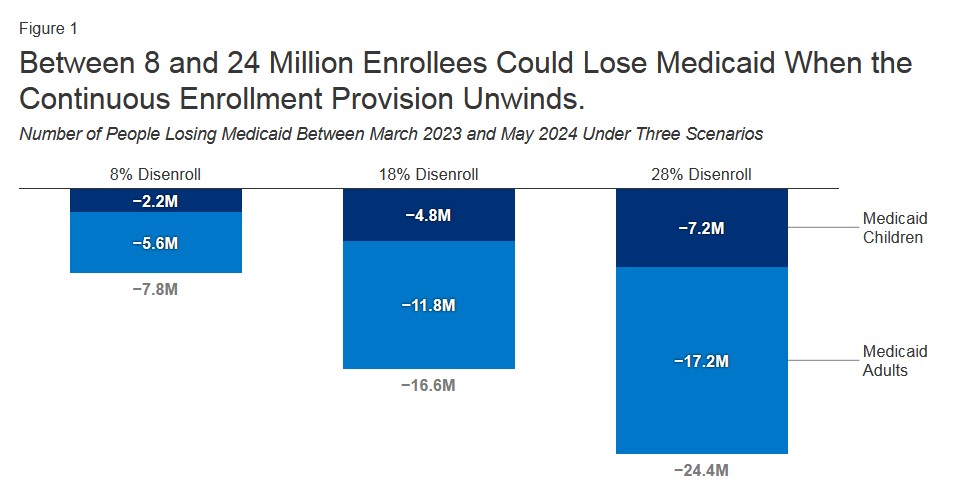
How Many People Might Lose Medicaid When States Unwind Continuous Enrollment?
Significant improvement in glycemic control among participants demonstrates the substantial impact that pharmacies partnered with charitable medication distributors such as the Dispensary of Hope can have on individuals with insulin-treated T2D
This toolkit, comprised of fact sheets, worksheets, sample communications materials, and sample social media is designed to help aid how you support your own mental health journey, along with your community’s.
APPLICATIONS ARE OPEN! – Letters of Intent due 9/15/23
More than 34 million people in the United States were living in food insecure households in 2021, a decline from 38 million in 2020. The combination of the expanded child tax credit, Supplemental Nutrition Assistance Program benefits, and private donations all contributed to reducing food insecurity during the pandemic. Still there is much more work to be done, with food costs spiking 11.4%, the largest annual increase since 1979, inflation factors could easily cause food insecurity to grow.
Recent federal legislative and regulatory updates in managed care pharmacy have prioritized topics ranging from expedited access to novel therapeutics to the health disparities and equity concerns affecting patient populations nationwide, but progress on these developments will depend on the impact of the midterm elections
FDA approves 1 Year delay of Track & Trace requirements
Charitable Pharmacies of America organization member receives Health Equity grant
Branson MO: My Neighbor’s Charitable Pharmacy (NCP) will open its doors at 1232 Branson Hills Parkway February of 2023
St. Vincent de Paul Charitable Pharmacy offers article regarding impact of a charitable pharmacy on their community and patients
The Outcomes of Implementing and Integrating Comprehensive Medication Management in Team-Based Care: A Review of the Evidence on Quality, Access and Costs, December 2023
Healthy People 2030 Leveraging Healthy People to Advance Health Equity Health equity is the attainment of the highest level of health for all people. “Eliminate health disparities, achieve health equity, and attain health literacy to improve the health and well-being of all.”
An opportunity for charitable pharmacies to collaborate with oncology practices for non-oncology medications during and after treatment.
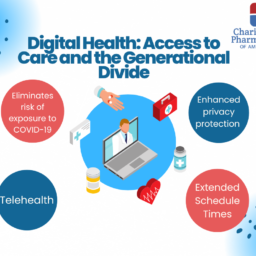
The term digital divide is defined as the differences
of economic and social inequality in both access and usage of ICTs. 2, 3 Some population groups that are
affected by the digital divide include uninsured, at or below 300% of the Federal Poverty Level (FPL), lack
of internet access, etc
Once the continuous enrollment ends, it is estimated between 5 -14 million individuals will be affected
Medication non-adherence has led to at least 100,000 preventable deaths each year and $100 billion annually in preventable healthcare costs in the United States